
The Receipt #2 🧾
AI predictions, Principles for hard times and the future of household names

Hey there, if you missed it this is the second installment of a series I’m calling The Receipt. This is a way for me to share some short-form thoughts and things that don’t require a longer article to explain.
For now, you can expect just a few installments of this format but if you really like it let me know in the comments and I can keep it going.
Long-form articles and interviews will continue regardless.
Alright, here we go.
3 predictions on how AI will impact CPG
1. Software gets easier to build → software becomes more competitive and less profitable → capital is freed up for tangible, consumer goods that can turn profit.
2. Consumers get AI-junk-content fatigue and lean further into brands with a real human face.
3. Search engines die. Product discovery turns from keyword search to conversational search. Consumers bring their use case to AI bots and the bot “solves the problem” offering products across categories. Products that have a clear job-to-be-done come out on top.
Principles for hard times
WWII had a huge effect on U.S. food brands. Specifically, food rationing constrained how much brands could produce, especially those considered “non-essential”.
Charles Elmer Doolin's company, Fritos, was one of these “non-essential” brands and the war put his business at risk of going under. However, instead of excepting defeat or trying to “wait out the storm” Doolin worked with the military to make Fritos part of soldier rations. He made the case that they were in light to ship overseas and their calorie density would give soldiers much needed energy. Consequently Fritos was able to avoid rationing and grow to be the largest snack brand in the U.S. - all while other snack brands were contracting.
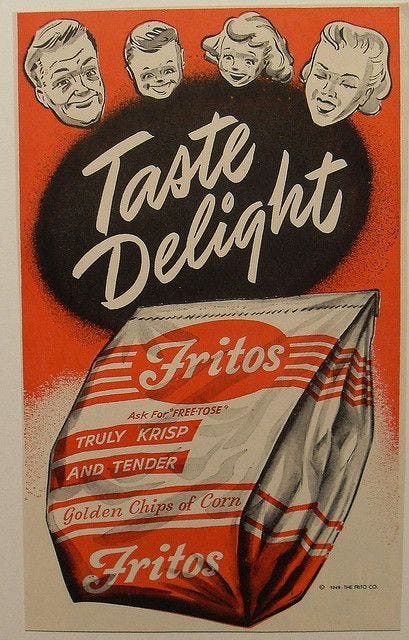
Working with the military paid off in another way. At the end of WWII, the U.S. military had a very large store of powdered cheese. In an attempt to offload the excess, they offered to sell the cheese to Doolin at a huge discount. Doolin bought the cheese and afterward, in looking for a way to use it, invented the much-loved Cheetos.
Principle # 1
One key part of the martial arts style Jiu-Jitsu is to use your opponents energy to gain an advantage. You use the momentum of their attack to move them into a position where you have the advantage. Doolin used this same technique to grow his brand. WWII was a big problem for his business but he used the inherent energy in the problem to instead create an advantage. He did it so well, that Frito became the number one snack brand in America. Great business strategists do this. They understand the forces at play and work in harmony with those forces to build something great.
Lesson #2
In creativity research there’s something called the blank page problem. The idea is that if you give people too much flexibility, it actually creates struggle and creativity is stifled. For example, if you give someone a piece of paper and ask them to draw anything, they will usually experience a slight mental block. Then, most people will draw something very simple like a stick figure.
But if instead you put a line or shape on the paper and ask them to draw something using what is already on the page, they will not only experience less of a mental block, but they will usually draw something more unique and creative.
Marissa Mayer, former CEO of Yahoo described the same phenomenon when she said that “creativity loves constraint”. Doolin created the Cheeto because he needed to figure out what he was going to do with excess cheese powder. Cheese powder was the line already on the page. Brands with vast resources and opportunity actually create far less novel products and business models because there's nothing forcing them to do so. In the end, it is to their disadvantage.
Household names may be a thing of the past
Your consumer brand may never be a household name. And yet, you can still be hugely successful.
It used to be that there were few choices when it came to food and beverage. This meant that everyone ate and drank the same stuff - thus the idea of a household name.
But the economics generally don't work that way anymore. The barriers to entry in consumer goods are much lower now. This means new brands are launching every day solving more and more specific problems for consumers.
Consumers in turn have become used to their needs being met with specificity. The internet and Amazon have played a big role here. Instead of picking between 5 cracker brands, all of which are just mostly meeting my needs, I now can pick a cracker that is the exact texture, flavor profile and size I want. Oh yeah, and if I want it gluten-free I can have that too.
All of this makes it unlikely that any brand will become a “household name” where 70+% of Americans know what you sell.
However, that doesn’t mean the era of hugely successful CPGs is gone.
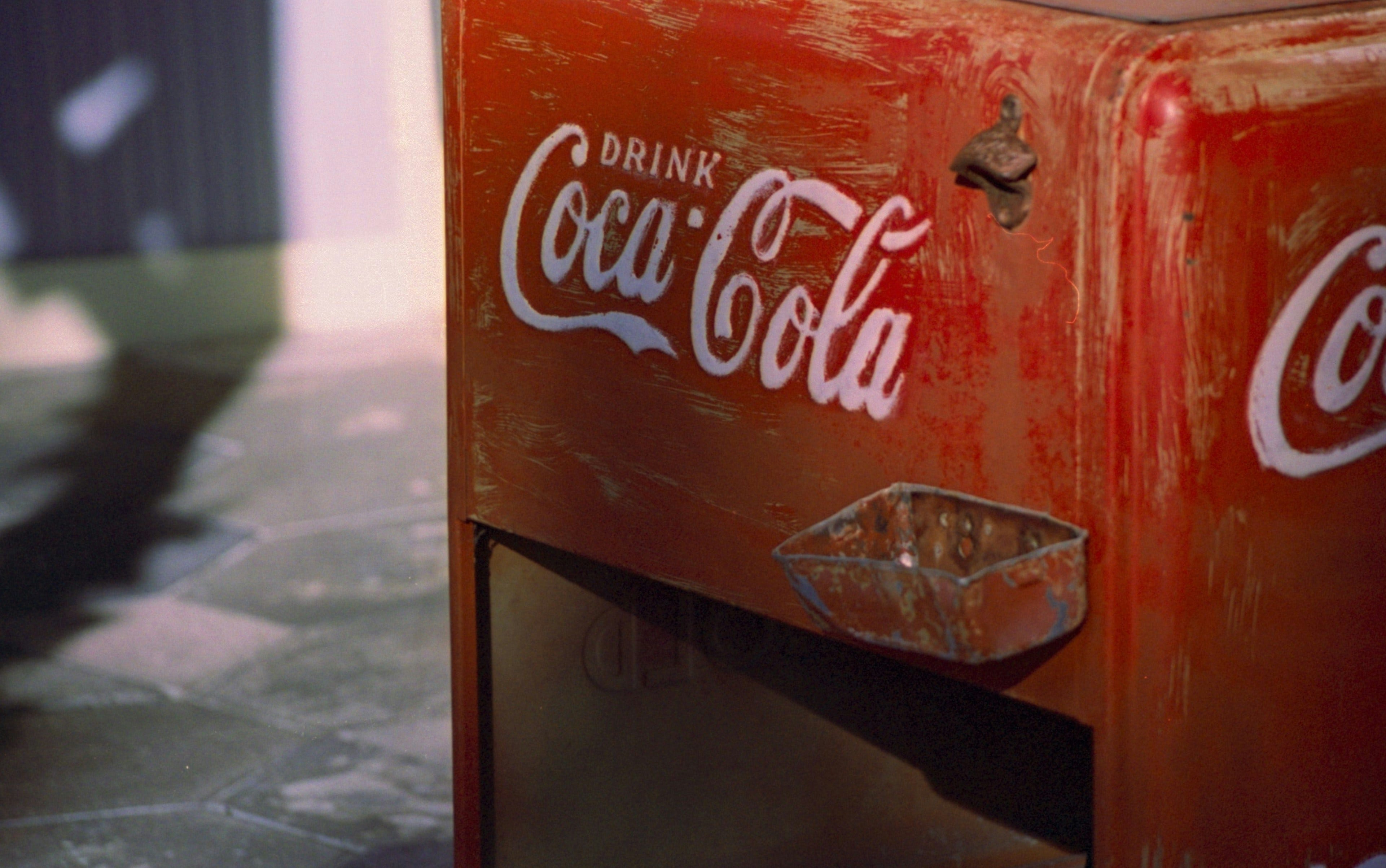
Instead it creates a world where the brands that succeed are those that accept this dynamic. They own a niche/occasion and they own it profitably. And instead of trying to take that product and increase the household penetration to the level of Coke in the 1950’s, they take their profits and use them to hop into a new niche/occasion and they'll repeat this same process to build out a federation of occasion-specific products that equal the scale of household names of yesteryear. This approach can also have certain defensibility benefits which I wrote about here.
Of course there are exceptions but they will be fewer and fewer as time goes on. I don't think we can put the genie back in the bottle when it comes to low barriers of entry and higher consumer expectations.
Take care,
Jordon ✌️
Photo credits:
Photo #1 1949 Fritos Corn Chips Ad
Photo #2 by Cari Kolipoki on Unsplash